A water bill that jumped 30% with no change in usage. A ceiling stain that keeps reappearing after patches. A soft spot in the flooring with no visible source. These are signs of a hidden leak that's been running long enough to cause structural damage — and every day it runs is money lost and damage accumulating. Masters Plumbing Service uses acoustic ground microphones, thermal imaging cameras, and precision pressure testing in Devon, PA to locate leaks without speculative demolition.
📞 Call +1-855-718-1500 — Find Your Leak Today
No single detection method works for every leak scenario. Our technicians are trained on four distinct approaches and select the right tool — or combination of tools — based on the pipe type, building construction, and leak characteristics.
Acoustic detection is most effective on metal pipe (copper, cast iron) under slab or in concrete — materials that conduct sound efficiently. It works in quiet environments and requires shutting off the house briefly to establish a clean acoustic baseline.
Active water leaks — hot or cold — create a temperature differential on the surfaces they contact. An infrared camera shows these differentials as color-coded heat maps, revealing the wet zone inside a wall or under a floor without any cutting. A cold water leak behind drywall appears as a spreading blue-gray cool zone; a hot water leak shows the inverse.
We isolate the supply system, pressurize it to operating pressure, and monitor pressure over a timed hold period. Any pressure drop confirms active water loss from the supply side. By isolating zones — hot side vs. cold side, section by section — we narrow down which branch of the supply system is leaking before the detection phase begins.
For leaks that don't produce sufficient acoustic signature — very slow leaks, polyethylene pipe, or leaks deep under concrete — we can introduce a nitrogen/hydrogen tracer gas mixture into the isolated pipe and use a calibrated gas detector at the surface to find where the gas escapes. The detection sensitivity can locate leaks that produce no discernible pressure drop during a standard timed test.
Our detection service covers the full property, not just the obvious locations.
Supply lines run under or through the concrete slab in most slab-on-grade homes. When these lines fail — from corrosion, shifting, or manufacturing defects — the leak is invisible from the surface but audible to acoustic equipment. We walk the floor on a grid pattern, map the loudest detection points, and triangulate to a specific floor location, typically within a square foot.
We document the thermal anomaly, mark the approximate pipe location, and recommend a minimal access cut rather than a wide wall opening.
Supply lines between the meter and the structure run underground and are vulnerable to corrosion, ground movement, and tree root damage. A main supply line leak shows as unusually high meter usage with all interior fixtures off, sometimes with wet ground or sinkholes along the line path. Acoustic detection locates the failure in the buried line precisely enough to minimize excavation footprint.
Irrigation system leaks in main supply lines and lateral runs are found by isolating zones with the irrigation controller and pressure-testing each zone individually. Zone by zone testing narrows the failure to the smallest possible section.
Multi-story buildings, commercial kitchens, retail spaces, and industrial properties have complex pipe networks where a supply or drain leak can go undetected through multiple floors before surfacing. We approach commercial detection systematically — zone by zone pressure isolation, thermal scan of suspect surfaces, and acoustic confirmation.
Insurance claims for water damage from hidden leaks typically require documentation that the leak was not visible or detectable without specialized equipment. Our detection report includes: pressure test results confirming active water loss, detection method used, thermal imagery or acoustic mapping showing leak location, and technician certification information.
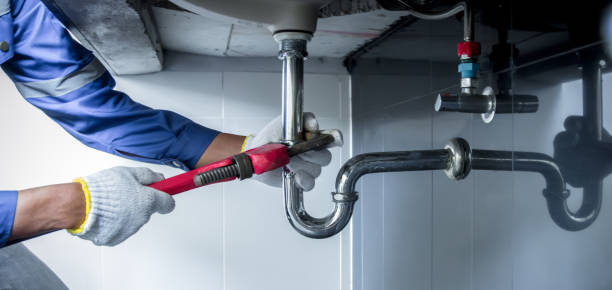
Finding a hidden leak isn't a single step — it's a protocol that combines water loss confirmation, zone isolation, and targeted detection in sequence.
We start at the meter. All fixtures off, we watch the meter for 10 minutes. Movement confirms active water loss from the supply side. We also check for any visible evidence — water stains, soft floors, moisture readings with a moisture meter at suspect wall surfaces.
Zone isolation is the step that turns "there's a leak somewhere in the house" into "the leak is on the hot side supply, between the water heater and the master bath."
We document findings with thermal images and note detection readings at multiple grid points to triangulate the strongest signal.
Insurance claims: the report is formatted to support a claim for water damage from a concealed leak. We can provide supplemental documentation on request.

High-efficiency home with a leak that defied normal detection. Water loss was slow — about 1.5 gallons per hour. The tech used tracer gas after pressure testing confirmed the loss but acoustic detection couldn't localize it clearly. Gas detection found the escape at a micro-fitting under the slab in the utility corridor. Impressive work.
Ceiling stain in the living room kept coming back despite two drywall patches. Masters Plumbing Service ran the thermal camera and found the wet zone was traveling from a supply line joint 9 feet away and flowing down a horizontal framing member — explaining why the patch kept failing. They marked the actual pipe location, we opened 8 inches of wall there, and the repair held. No more stain.
Commercial building where water costs were running 40% above baseline for six months. Masters Plumbing Service ran a systematic zone-by-zone pressure isolation across four floors, narrowed the loss to the third-floor kitchen supply branch, and located the failure with thermal imaging at a concealed valve body in the ceiling. No damage to the finished ceiling.

Our detection technicians are equipped with acoustic, thermal, and tracer gas tools for the full range of leak scenarios found in Devon, PA homes and commercial properties.

Masters Plumbing Service's detection team finds hidden leaks in Devon homes and commercial properties using equipment that eliminates guesswork. The detection appointment pays for itself the moment it prevents one unnecessary wall opening.
📞 Call +1-855-718-1500 Now